


Meet Diana Garber, Feng Shui Master
Authentic Feng Shui for Business and Home.
Authentic (or traditional) Feng Shui promotes healthy environments, fulfilling experiences, and quantifiable results.
Transform from surviving to thriving.
Its simple physics — everything is resonating molecules of energy.
Most people don’t think of their homes and workplaces as living, breathing buildings; but negativity affects everyone.
When I speak at medical conventions I make the point that patients seek medical advice when they come to physicians. The physician performs an analysis, makes a diagnosis, and develops a treatment plan. However, if the patient returns to a sick environment, progress can be stalled. Authentic Feng Shui addressed the environment of your home or your workplace and diagnoses the current situation and provides the treatments if necessary.
Authentic Feng Shui at its best is risk management.
Feng Shui promotes healthy environments, fulfilling experiences, and quantifiable results. Transform from surviving to thriving.
Creating balance from chaos, the energetic shift brings
wellness, success, and joy to those who occupy a healed space.
What are Clients Saying?
Two new corporate clients in a week
“I moved offices recently and received a commercial Feng Shui consultation from Diana Garber. I implemented the remedies as she suggested, and obtained two new corporate clients within a week!”
This is a personal reference as well as a professional reference for Diana Garber, President of Intuitive Concepts.
We became involved with her on a professional basis about four years ago when she did a Feng Shui analysis on our home in Ohio and most recently on our winter home in Arizona. Diana’s approach is different than other practitioners as she is so full of knowledge in this area, very thorough, and takes it to a much deeper level. We especially like her determination to make sure our goals are met. She is very good about following up and has a system of measuring the outcomes of our goals. It’s obvious she has an intense belief and desire to want this science to help enrich our lives and others she works with as well. We believe we have seen positive results working with Diana.
I really appreciate you taking me on for my walkabout. Especially after working with you, I realize you went way out of your way to accommodate me. You put off travel, and always asked how I felt about the experience. In addition, you were concerned about me learning what I wanted to. This is far more than what the other mentors have done. This experience has been one of the single most perception-altering experiences I have ever had. I learned about myself, and my preferences. I also was able to learn about feng shui from an expert. I view things differently now. Whether I am looking at numerology, identifying elements in a person’s home, or simply evaluating a structure, my perception is permanently changed. I also learned about business and being a woman business owner … the trials, tribulations, and most importantly the grace to deal with it. I can’t thank you enough. You helped me out with Spring break, talked with me about my family, as well as helping me find a second placement. I can talk to you about anything which is difficult for me to even do with my peers. This experience has been amazing, thanks to you. Again, I really appreciate everything you have done.
Thank you so much for your time and energy. You have been an incredible help to me and my family since our move from Arizona. I really appreciate the time you spent at my home and the continued communication through phone and e-mail afterward. I am also thankful that you were available to answer questions well after my original contract commitment. Thanks again for your time and dedication to making our lives better through Feng Shui.
Feng Shui helped smooth the path for a more efficient and profitable journey.
On August 5th of 2013 we moved in to the new space. With our heightening of our Feng Shui, our business has really take off. At the end of July 2014 we are $500,000 ahead of our sales goal for the year with gross margin the highest that we have ever had. The amount of asbestos inspection and abatement jobs have already surpassed what we did all last year, and this is only July. We have sent 6 team members to Aileron’s Executive Profession Management training and are sending more soon. We have completed our written strategic and succession plan and are implementing it now. We are so thrilled that the company has reached a new level.
Is it just Feng Shui? Of course not, as Diana says Feng Shui is one tool in the tool box. It took vision, creativity, perseverance, heart and our teams focus to achieve this level of success. Feng Shui helped smooth the path for a more efficient and profitable journey.
Make Feng Shui one of your tools. Diana is great to work with and the results are tangible and quantifiable. Please stop by our office anytime and experience it for yourself. We love our space and you will too.
The phone is ringing again and we’re busy
“We’ve been in this commercial building for 49 years with additions added at various different periods of time. The business was experiencing a noticeably steady decline, especially since the 1990’s. Within the last 3 years, even though there has been a recession, it declined even more drastically. Determined not to give up, I hired Diana Garber of Intuitive Concepts to analyze the energy.
We’re about 60% complete with the Feng Shui recommendations in 3 months. I believe business has increased 100%! The phone is ringing again and we’re busy! I also made staff changes that made a huge difference in cash flow energy. Another troublesome staff member left suddenly.”
I heard Diana speak at Otterbein College’s integrative medicine class. I knew about Western Feng Shui but didn’t do much with it. I guess we were waiting for Diana and the real Feng Shui. Her approach made sense so we decided to hire her. Our main goal is health — I have been treated for breast cancer. Some of the color recommendations were outside my comfort level, but we followed her advice (which included painting and adding moving metal to specific locations). I’m happy to report my first clear mammogram in two years. Also, we’ve seen a couple of side benefits (not part of our original goals): my son’s sleep (which improved dramatically); and the use of our family room. We never spent time there, but after the changes, people are drawn there. Too, I like the changes to our bedroom and look forward to more results to reveal themselves. I only wish we had known about her before decorating our home the first time, but the reinvestment is worth it.
I am very pleased with Intuitive Concepts. I have had an interest in Feng Shui for many years and decided to contact Diana when I made a move into a small tourist town. I felt it was to my advantage personally and professionally to create the best possible environment for growth. After consultation with Diana…(I liked her instantly and trusted her!) I proceeded to make the changes necessary (remedies) and I believe I am seeing and feeling the results. My business, despite the current economy, has increased and there are other noticeable (to me) changes occurring. The support and follow-up have been excellent. I highly recommend Diana Garber of Intuitive Concepts.
#1 Realtor in Logan County Achieves Result
This has been a monumental year for Royer Realty. We celebrated our silver (25th) anniversary, I continue to be the #1 realtor in Logan County, and we hired Intuitive Concepts to help with the next 25.
I am very happy with the Feng Shui/energy changes that Diana made for the building and in our offices. We will surpass our 2013 goals this month — and it’s only August!
I am working with her on my new house, and am excited to see results there too.”
“Thanks for coming to our rescue in Atlanta! My best to you always.”
We had concrete, measurable results.
“During the initial walk through Diana made some suggestions about changes to remove financial blocks. I started making some changes that night, mostly cleaning out clutter in specific areas. Within two days I received a call for an interview. which started out temporary and is now full time. It’s exactly what I was looking for!
When we received our written report, there were other suggestions to improve finances. We started implementing them right away. Within six weeks, my husband received a raise that was more than three times his company’s average and 50% more than what he intended to fight for! I also received an unexpected raise, even though I was still a temporary employee and not really ‘entitled’ to one.
So, we had concrete, measurable results that we had no control over. In addition, we enjoy our home and each other more. We look forward to using Feng Shui to continue improving our environment both at home and work.”
Recent Blog Posts
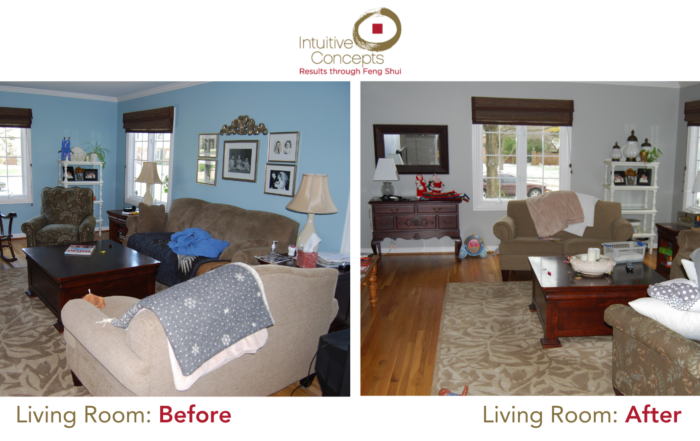
True Story: Home Feng Shui Changes Family’s Life for the Better
After relocating to Ohio, a lovely family of seven met with unexpected challenges. First, the husband’s promised promotion didn’t happen, and he was traveling constantly, and then one of the children fell ill with cancer. [...]

When You Stop Learning, You’re in the Ground
Since school is back in session, my focus this month includes education, self-development, and safety. Goodness sakes … the news every day is about child violence and school shootings. Education: My Dad used to say [...]

Take 30 Seconds to Help Stop Unrestricted New Cell Tower Installations Nationwide!
Please take 30 seconds to help stop this dangerous federal bill that will pave the way for unrestricted cell tower construction across the United States. If Federal bill HR 3557 passes it will eliminate all [...]
As Seen On: